On Chain Analytics for DeFi Measuring Slippage, Efficiency, and Market Health
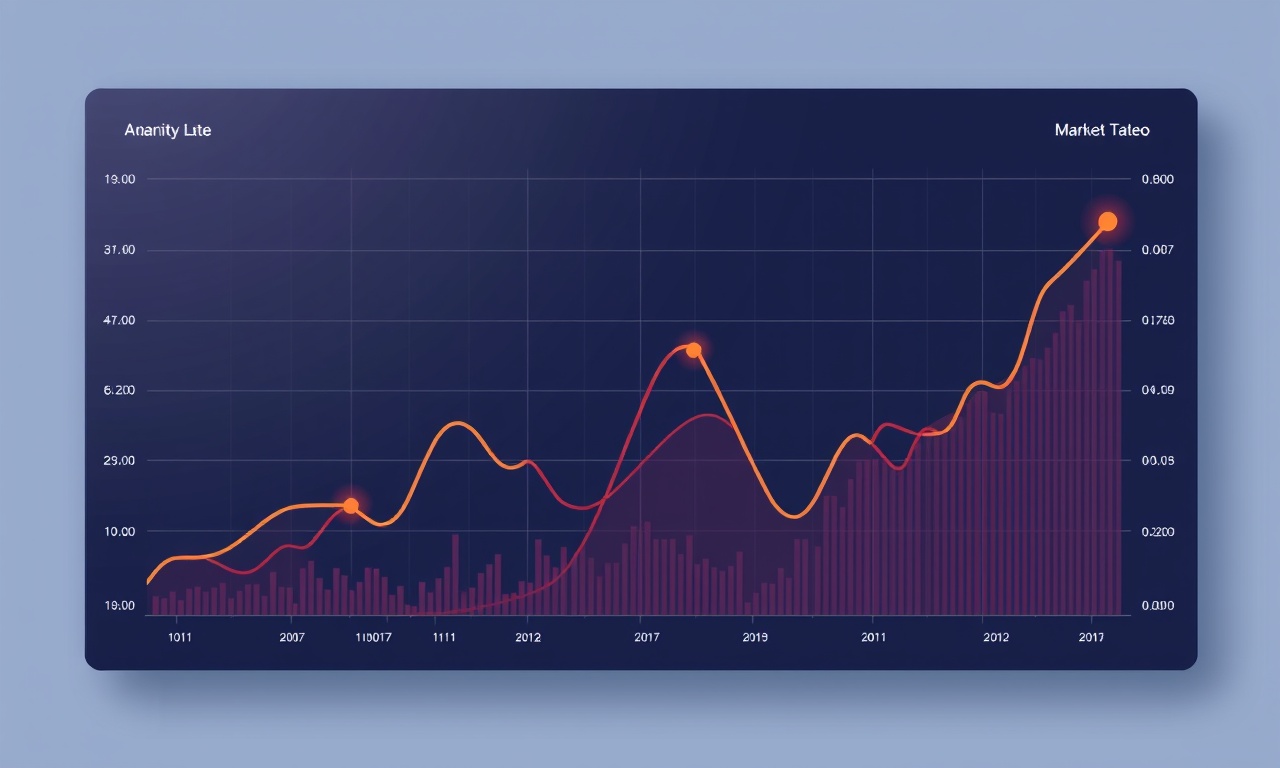
Ever watched a big block of $ETH disappear in a flash when you finally decided to sell?
The slip between the order you thought would execute and the price that actually settled is what we call slippage. It’s a quiet thief that can turn a tidy trade into a hidden cost, and it’s especially tricky in the world of automated market makers (AMMs) that power most DeFi exchanges today.
Why slippage matters
In traditional stock markets, the bid‑ask spread already tells you the minimum cost of a trade. That spread is set by market makers and liquidity providers. In DeFi AMMs, the “spread” is built into the mathematical formula that balances the two tokens in a pool. When you send an order that asks for too many tokens relative to the pool size, the pool self‑adjusts, and the price moves against you. The bigger the pool relative to your trade, the smaller the slippage—just like walking through a crowded hallway: if the crowd is thin, you move with the flow; if thick, you stall and step back.
When markets are healthy, pools are deep and diverse; slippage is small and predictable. When liquidity dries up or large orders flood in—think a flash crash or a massive “buy‑the‑dip” rally—slippage spikes. For an investor, that means either paying more for assets or getting less for sales, which erodes returns over time.
Measuring slippage on chain
1. Grab the data
All AMMs are public by design. Each trade is a transaction that writes to a smart contract, and the state transitions are recorded on the blockchain. If you want to measure slippage for a specific pair, you’ll pull:
- The reserves before the trade (
reserve0andreserve1) - The input amount and the output amount recorded in the transaction log
- The block timestamp
You can fetch this data through a node, GraphQL, or services like Alchemy or Infura. With a bit of scripting, you can build a slippage spreadsheet that records every trade in a pool over the last 30 days.
2. Compute the theoretical price
To know whether slippage occurred, you need a baseline. The ideal price is the ratio of the two reserves:
price = reserve1 / reserve0 (for a pool of token0 ↔ token1)
If you’re buying token1 with token0, you calculate the output you would get if the pool didn’t move:
output_expected = amount_in * reserve1 / (reserve0 + amount_in)
The real output (output_actual) is what the contract reports in the event log. Slippage is the percent difference:
slippage = (output_expected - output_actual) / output_expected * 100%
If slippage is negative, you actually received more than expected; that can happen with very small trades or if the pool had a favourable price movement since you looked at the reserves.
3. Aggregate and analyse
Once you have a time‑series of slippage values, slice it by:
- Time of day (many liquidity‑providing bots add funds during off‑hours)
- Token volatility (more volatile pairs tend to slippage‑swell)
- Trade size relative to pool depth (a 1 % move can cost 0.25 % slippage if the pool is 100 × the trade)
Plotting these lets you spot patterns. For example, if a pair consistently slippage‑shines in the first ten minutes after a large trade, the pool might be over‑leveraged or illiquid for that token.
DEX efficiency: Beyond slippage
Slippage tells you how much you paid or earned differently. It doesn’t tell you why the exchange is inefficient. Efficiency metrics capture the systemic health of a DEX, answering questions like: Who pays the highest impermanent loss? How many users are trapped in front‑running attacks? Is the routing algorithm optimal?
1. Liquidity concentration
In perfect competition, a liquidity provider’s share is as large as the pool size. In reality, a few large LPs can dominate. Measure the share of liquidity each LP owns. A high concentration can mean the DEX is less robust to sudden market moves and more prone to price manipulation.
2. Trade routing performance
Many DEX aggregators route through multiple pools to find the best price. Measure how often the aggregator’s path diverges from the best possible path (that would have minimal slippage). A high divergence rate could indicate the aggregator’s algorithm is sub‑optimal or that users suffer extra costs.
3. Gas cost per trade
Since gas fees are a currency in the DeFi world, the effective trade cost includes both slippage and gas. If the average gas price spikes during certain events, that period might be considered inefficient. Compare the gas cost per unit of token moved across different DEXs.
4. Impermanent loss exposure
Calculate the dollar loss that LPs experience from holding liquidity compared to simply holding the underlying assets, factoring in slippage during withdrawal. High impermanent loss can discourage liquidity provisioning and erode the ecosystem’s ability to absorb trades.
Efficiency is not static. It must be monitored like the plant you water daily; otherwise, you’ll miss a wilting leaf before you notice.
Gauging overall market health through on‑chain signals
Market health in DeFi blends the health of individual pools with the macro‑structure of the ecosystem. Here are some composite indicators:
| Indicator | Why it matters | How to derive it |
|---|---|---|
| Total Value Locked (TVL) | A proxy for ecosystem trust (more TVL suggests more users). | Sum of token values across all pools, updated daily. |
| Liquidity Provider turnover | Frequent churn can signal volatility or low returns. | Compute the average time LPs lock funds; contrast high and low turnover rates. |
| Trade volume / TVL ratio | Indicates how actively the pool is used. | Total trade volume over the last 24 hrs divided by TVL. |
| Protocol fee revenue | Measures the incentive alignment for developers. | Sum of fees collected by the protocol; compare to TVL. |
| Network governance participation | A vibrant community implies healthy decision making. | Count of unique voters and proposal engagement. |
When you overlay slippage data on these pillars, a picture emerges. For instance, if slippage climbs steadily but TVL remains flat, that could hint at liquidity providers withdrawing in response to higher risk. Conversely, a spike in both slippage and volume could simply indicate a market rally that has yet to find its footing.
A step‑by‑step guide: From raw data to insight
-
Collect the raw on‑chain data: Pull the reserves, trade logs, and block timestamps for the pair you care about. Use a batch query so you can handle thousands of trades without spamming an API.
-
Compute theoretical prices for each trade. Save a dataset that includes
trade_id,time,reserve0,reserve1,input_amount,output_expected,output_actual, andslippage_percent. -
Segment the data: Group by day, hour, order size, and market volatility. Visualize the distribution of slippage. Look for outliers—those are your red flags.
-
Correlate with market health metrics: Overlay slippage spikes with TVL changes, liquidity turnover, and fee revenue fluctuations. Use cross‑correlation to see if one lags behind the other.
-
Generate alerts: Set thresholds (e.g., slippage > 2 % for trades > 10 % of pool depth). Whenever an alert triggers, investigate: Is there a sudden large trade? Has an LP withdrawn? Is a new token listing causing volatility?
-
Act on the insights:
- If slippage is consistently high for a pool, consider diversifying into a deeper pool.
- If a pool’s liquidity is drying up, be cautious with large trades.
- If impermanent loss is a concern, adjust the risk profile of your LP holdings.
Real‑world anecdote: When a meme token turned a slippage nightmare
Last March, a meme token named MimicCoin went viral. Within hours, a 1 BTC buy order slammed the pool. The on‑chain snapshot shows:
- Pool reserves: 5 MimicCoin / 2 BTC
- Input: 500 MimicCoin
- Output: 0.001 BTC
The theoretical output would have been 0.0012 BTC, meaning an 8 % slippage. At an instantaneous price of ~10 BTC/MimicCoin, that’s a cost of about 0.008 BTC—more than the average gas fee. The slippage spike coincided with the launch of a new liquidity pool featuring MimicCoin on another DEX, which flooded the market with sellers who were trying to exit before the next price surge.
The lesson: the market health metric (TVL) spiked, but the trade‑volume/TVL ratio was anomalously high, indicating too much swapping relative to underlying value. A sharp price pullback followed, leaving many participants with a hefty implicit fee.
Take‑home: Turning data into actionable confidence
- Start small – Pick a single pair you trade regularly. Pull its reserve data for the past 30 days. Compute slippage for a handful of the biggest trades.
- Compare and contextualise – Is your average slippage above 1 %? If so, consider executing the trade on a pool that’s at least 10 × the trade size.
- Keep an eye on the ecosystem – Track TVL and LP turnover for that pair. If TVL is shrinking or LPs are leaving rapidly, the pool is under stress.
- Use alerts, not alarms – Set a simple spreadsheet rule: if slippage exceeds 2 % for a trade > 10 % of pool depth, pause and evaluate.
- Join community chats – Many DeFi analytics projects publish weekly reports. Reading them can sharpen your intuition and keep you updated on network health.
In the end, slippage isn’t a mysterious curse. It’s a measurable phenomenon rooted in supply, demand, and the mechanics of automated markets. By pulling the numbers from the blockchain, we can treat it like a gardener does a wilted leaf: observe, understand, and adjust our strategies to keep the ecosystem thriving.
Remember: it’s less about timing the market and more about understanding the underlying engine. The blockchain is honest; it tells us everything, raw and unfiltered. We just need to learn how to read the story.

.png)
Sofia Renz
Sofia is a blockchain strategist and educator passionate about Web3 transparency. She explores risk frameworks, incentive design, and sustainable yield systems within DeFi. Her writing simplifies deep crypto concepts for readers at every level.
Discussion (10)
Join the Discussion
Your comment has been submitted for moderation.
Random Posts

Mastering DeFi Essentials: Vocabulary, Protocols, and Impermanent Loss
Unlock DeFi with clear terms, protocol basics, and impermanent loss insight. Learn to read whitepapers, explain projects, and choose smart liquidity pools.
4 months ago

Exploring NFT-Fi Integration Within GameFi Ecosystems
Discover how NFT-Fi transforms GameFi, blending unique digital assets with DeFi tools for liquidity, collateral, and new play-to-earn economics, unlocking richer incentives and challenges.
4 months ago

Mastering DeFi Interest Rate Models and Crypto RFR Calculations
Discover how DeFi protocols algorithmically set interest rates and compute crypto risk, free rates, turning borrowing into a programmable market.
1 month ago

The architecture of decentralized finance tokens standards governance and vesting strategies
Explore how DeFi token standards, utility, governance, and vesting shape secure, scalable, user, friendly systems. Discover practical examples and future insights.
8 months ago

Token Standards as the Backbone of DeFi Ecosystems and Their Future Path
Token standards are the lifeblood of DeFi, enabling seamless composability, guiding new rebasing tokens, and shaping future layer-2 solutions. Discover how they power the ecosystem and what’s next.
5 months ago
Latest Posts

Foundations Of DeFi Core Primitives And Governance Models
Smart contracts are DeFi’s nervous system: deterministic, immutable, transparent. Governance models let protocols evolve autonomously without central authority.
2 days ago
Deep Dive Into L2 Scaling For DeFi And The Cost Of ZK Rollup Proof Generation
Learn how Layer-2, especially ZK rollups, boosts DeFi with faster, cheaper transactions and uncovering the real cost of generating zk proofs.
2 days ago

Modeling Interest Rates in Decentralized Finance
Discover how DeFi protocols set dynamic interest rates using supply-demand curves, optimize yields, and shield against liquidations, essential insights for developers and liquidity providers.
3 days ago