Navigating DeFi Risk Through Economic Manipulation and Whale Concentration
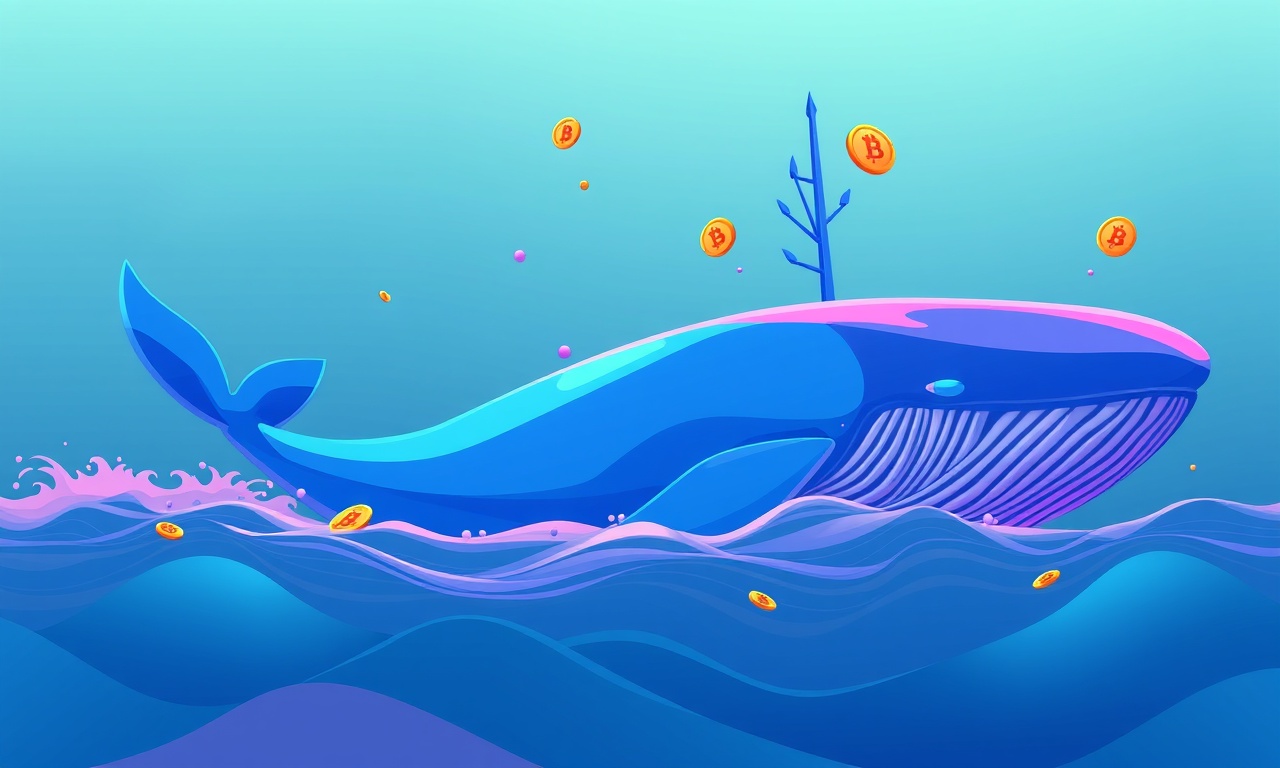
When I first opened a DeFi dashboard, the numbers looked like a bright city skyline at dusk – all those charts, tokens, and charts that seemed to promise a quick jump in value. I was staring at a price chart that had just spiked 40 % in a single hour. I felt that rush of excitement that comes from the idea of catching a wave before it splashes. But the next hour, the price fell back, and I was left staring at a candle that ended flat and wondering why it didn’t stay high. That moment, that single candle, is a microcosm of the risk that’s hidden beneath the glitter of decentralized finance.
We’re all familiar with the idea that “the market is efficient.” That phrase gives us a comforting narrative – that price movements are the result of collective rationality. In DeFi, that narrative is more fragile because the mechanisms that set those prices are, by design, automated but not necessarily transparent. The reality is that a handful of actors – the whales – can move markets like a few giant fish can change a river’s flow. And, even more subtly, economic incentives embedded in smart contracts can create hidden pathways for manipulation. Below we’ll unpack these dynamics, step by step, so you can spot red flags before they bite.
The Anatomy of a DeFi Market
Before we talk about manipulation, let’s remind ourselves how a typical automated market maker (AMM) works. The most popular model, the constant product formula, keeps a pool’s reserves balanced by multiplying them:
x * y = k
Where x and y are the reserves of two tokens, and k is a constant. When someone swaps token X for token Y, the pool’s x increases and y decreases, which in turn changes the price you see.
That formula sounds elegant, but it also means that large swaps can tip the scale. A whale (someone who can move several million dollars worth of tokens) can push the reserves enough to force a price far away from the market’s true value. If the swap happens quickly, the price may stay high or low long enough for other participants to act on it – a classic “pump and dump” scenario.
Remember: the AMM itself is just a contract on the blockchain. It has no human operator to watch out for sudden, abnormal activity. The only checks it has are the mathematical rules coded into it.
Economic Manipulation: The “Sybil” Strategy
One of the more subtle forms of manipulation comes from designing economic incentives that reward specific behaviors. Let’s call this the Sybil strategy – named after the “multiple identity” trick used in consensus protocols. In DeFi, a protocol may reward liquidity providers (LPs) for providing a certain ratio of tokens. An attacker can create multiple fake accounts to satisfy the ratio, claiming rewards that the protocol thinks are earned through genuine liquidity.
The problem is twofold:
- Reward Dilution – real liquidity providers get a smaller slice of the reward pie because the attacker's fake positions occupy a large share.
- Price Distortion – by creating multiple accounts, the attacker can also run small trades on each account that collectively move the price of the token in a direction that benefits their real holdings.
A real-world example is the “flash loan” attack on the DAO that exploited a reentrancy bug to drain funds. Even though the attack happened years ago, it set a precedent: smart contract logic that looks fair on paper can be subverted by clever actors who understand how the math works.
Whale Concentration: A Vicious Cycle
Whales are the same actors who can perform Sybil attacks. They can also concentrate liquidity in a few pools, making those pools extremely sensitive to a single large trade. Picture a garden where most of the plants are in a single patch. If one tree in that patch dies, the whole patch looks unhealthy. Similarly, if a whale pulls a large amount of a token from a pool, the pool’s reserves are left in a vulnerable state.
Case Study: The 2023 USDC‑USDT Swap
In early 2023, a massive swap of USDC for USDT in a Uniswap V3 pool caused a temporary mispricing that lasted less than a minute. The swap was about 1.2 BUSD. Because both tokens are stablecoins, traders expected prices to be close to 1:1. Instead, the pool’s price jumped to 1.05. Within the next 10 seconds, arbitrageurs and bots corrected the mispricing, but the whale’s move forced the market to readjust twice in a single second.
This event demonstrates two things:
- Whale Moves Can Trigger Flashy Volatility – even in supposedly stable markets, a single large trade can create a price spike that looks like manipulation.
- Arbitrage Can Be a Double-Edged Sword – while arbitrageurs help restore equilibrium, their activity can also amplify the initial shock, creating a “price crash” for unsuspecting traders.
The Human Side of the Numbers
I’ve spent years working with institutional portfolios, where the focus is on risk-adjusted returns and diversification. When I transitioned to DeFi, the excitement was intoxicating, but so was the realization that we’re talking about a new kind of risk: structural risk. It’s not just a bad trade; it’s a flaw in the system that can be exploited by a single actor.
When a community hears that a token’s price has spiked overnight, their first instinct might be to buy. But a more cautious approach is to ask: Who is driving that spike? Is there an unusual amount of liquidity being moved? Are there sudden changes in the pool’s reserves? The answers often point to a whale, a smart contract bug, or a coordinated marketing push. We need to ask these questions because, as investors, we’re not just looking for returns – we’re looking for resilience.
Practical Ways to Spot Manipulation and Concentration
-
Check the Concentration Ratio
Look at the top 10 holders of a token on a block explorer. If they hold more than 20 % of the supply, that’s a warning sign. Even if the top 5 hold 10 %, the pool might still be sensitive to large trades. -
Analyze Liquidity Depth
Some DeFi analytics platforms show the depth of a pool – the total amount of tokens that can be swapped before a 1 % price impact occurs. A shallow depth means a single trade can move the market. A deep pool offers more protection. -
Monitor TVL and Whale Activity
Total Value Locked (TVL) gives a snapshot of how much capital is in a protocol. A sudden increase in TVL paired with a spike in the token’s price can signal whale deposits. Tools like DeFi Pulse or Dune Analytics let you track these metrics. -
Watch for Flash Loan Activity
Flash loans allow borrowing large amounts without collateral for a single transaction. If you see a sudden surge of flash loans involving a particular token, it could be a precursor to a manipulation attempt. -
Read the Code (If You Can)
If you have some Solidity knowledge, skim the contract. Look for functions that have no access control or that rely on external price oracles that could be manipulated. Even a quick audit can save you from a bad investment. -
Use Risk-Weighted Positioning
Treat DeFi tokens like a high-risk garden – only plant a small portion of your portfolio there. If the market moves against you, the loss is contained. -
Set Order Execution Limits
Many wallets and trading platforms allow you to set maximum slippage. This feature prevents your trade from being executed at a price worse than you’re willing to accept.
The Role of Governance and Transparency
DeFi is built on the idea that anyone can contribute to the codebase. Yet, governance is often a slow process. When a protocol changes its reward structure or adds a new token pair, it can inadvertently open new vectors for manipulation.
For example, when SushiSwap introduced its “Kashi” lending platform, it added a new reward token. Some liquidity providers began mining that token by providing liquidity to Kashi’s new pools. A few users noticed that a handful of accounts were earning a disproportionate amount of the new token. After community discussion, SushiSwap patched the reward logic to prevent the exploitation.
The lesson is that governance matters. A transparent, open dialogue about changes and a robust audit trail can catch potential manipulation before it becomes a systemic risk.
Whales, Market Makers, and the Psychology of the Crowd
Let’s pause for a moment and think about the human psychology behind whale moves. A whale’s decision to trade a large amount is not purely financial; it’s also strategic. They might be:
- Covering Positions – after a series of successful trades, a whale might want to lock in profits by selling large amounts.
- Coordinating with Bots – a whale might collaborate with arbitrage bots to create a cascade of trades that move the price before the market can react.
- Testing the Waters – by making a large trade, they can gauge market depth and see how many traders are willing to buy or sell.
Because these whales have the resources to wait for the right moment, they can often force the market to move in a way that benefits them. Their actions can create a false sense of momentum that scares the average trader into buying or selling at the wrong time.
A Real-World Example: The DODO Liquidity Attack
DODO is a hybrid AMM that claims to provide better price execution. In mid‑2022, a whale executed a 3 BUSD swap in a DODO pool, causing the pool’s price to swing from 1:1 to 1:1.02 in a matter of seconds. The pool’s depth was shallow, and the whale’s move was almost instantaneous. Arbitrage bots attempted to correct the price, but the whale's subsequent swap (a second large swap in the opposite direction) kept the price oscillating.
The community responded by adding a higher minimum pool depth and implementing a delay mechanism for large trades. This example shows how a protocol can adapt its mechanics in response to whale activity – but it also underscores how whales can test the limits of the system before governance steps in.
Why Transparency Is Your Best Defense
If we look at the best practices in traditional finance, transparency is king. Public filings, regulatory oversight, and audited books keep market participants honest. In DeFi, we have to rely on open-source code, community scrutiny, and blockchain data. The advantage is that all transactions are recorded on a public ledger. The disadvantage is that the ledger is a tool, not a guardian.
When you audit a smart contract or analyze a pool’s health, you’re essentially performing a financial audit on an unregulated market. This can be hard work, but it pays dividends. A few minutes spent checking a pool’s depth or a token’s holder distribution can save you from a loss that could have been avoided.
The Bottom Line: Stay Grounded, Stay Informed
Let’s zoom out. The DeFi landscape is still young, and its mechanisms are evolving. Whale concentration and economic manipulation are not new; they’ve existed in every financial system for centuries, just hidden behind different mechanisms. In DeFi, they’re just more visible because of the transparency of the blockchain.
What can you do? Treat DeFi like a high-risk garden. Plant only a small portion of your portfolio there, but tend it with care. Use the tools we’ve described to gauge depth, concentration, and governance. Keep your emotions in check. If a token’s price surges, pause. Ask: who moved it? Why? Is it sustainable or a trick of the system?
Your portfolio isn’t a one-size-fits-all machine. It’s a living organism that grows and shrinks with the market’s pulse. The more you understand its biology, the better you can protect it from manipulation, whale moves, and market shocks.
Takeaway: Before you buy into a DeFi token that has recently spiked, pause to check the pool’s depth, the concentration of holders, and the recent whale activity. A quick audit of these factors can be the difference between a solid investment and a costly misstep.
And remember, markets test patience before rewarding it. Keep your eyes on the long-term ecosystem, not just the overnight price.

.png)
JoshCryptoNomad
CryptoNomad is a pseudonymous researcher traveling across blockchains and protocols. He uncovers the stories behind DeFi innovation, exploring cross-chain ecosystems, emerging DAOs, and the philosophical side of decentralized finance.
Discussion (12)
Join the Discussion
Your comment has been submitted for moderation.
Random Posts

Unlocking DeFi Potential with L2 Solutions and Rollup Architectures
Layer two rollups slash gas fees and boost speed, letting DeFi thrive. Learn the difference between sovereign rollups and validium, and how this shifts tools for developers, investors, and users.
5 months ago

Charting the Path Through DeFi Foundational Concepts VAMM and CLOB Explained
Explore how DeFi orders work: compare a traditional order book with a virtual automated market maker. Learn why the structure of exchange matters and how it shapes smart trading decisions.
2 weeks ago
Auto Compounding Strategies for Optimal Yield and Low Gas
Discover how auto, compounding boosts DeFi yields while slashing gas fees, learn the smart contract tricks, incentive hacks, and low, cost tactics that keep returns high and transaction costs minimal.
6 months ago
Navigating DeFi Risk Through Economic Manipulation and Whale Concentration
Discover how whale activity and hidden economic shifts can trigger sharp DeFi price swings, revealing why market efficiency is fragile and how to spot manipulation before the next spike.
6 months ago
Demystifying DeFi Mechanics, Token Standards, Utility, and Transfer Fees
Unpack DeFi: how token standards like ERC, 20 and BEP, 20 work, what smart contracts mean, and why transfer fees matter. Learn to read your crypto portfolio like a grocery list and control your money.
5 months ago
Latest Posts

Foundations Of DeFi Core Primitives And Governance Models
Smart contracts are DeFi’s nervous system: deterministic, immutable, transparent. Governance models let protocols evolve autonomously without central authority.
2 days ago
Deep Dive Into L2 Scaling For DeFi And The Cost Of ZK Rollup Proof Generation
Learn how Layer-2, especially ZK rollups, boosts DeFi with faster, cheaper transactions and uncovering the real cost of generating zk proofs.
2 days ago
Modeling Interest Rates in Decentralized Finance
Discover how DeFi protocols set dynamic interest rates using supply-demand curves, optimize yields, and shield against liquidations, essential insights for developers and liquidity providers.
2 days ago