Optimizing Yield Generation by Balancing Protocol Fees and Rewards

Introduction
Decentralized finance has moved beyond simple lending and borrowing into a complex ecosystem where protocol owners, liquidity providers, and end users all compete for value. Two of the most powerful levers that protocols wield are the protocol fee charged on every transaction and the incentive rewards paid to participants who provide capital or services. Finding the right mix of these levers is a classic yield‑engineering challenge: if the fee is too high, participants leave; if the reward is too high, the protocol’s sustainability is compromised.
This article explores the mechanics of protocol fee distribution and reward structures, explains the mathematical balance that governs net yield, and offers practical strategies for designers and managers to optimize both revenue and participant retention.
Understanding the Trade‑off
Protocol fees are collected whenever users transact on the platform—swaps, deposits, withdrawals, or other interactions. Rewards, on the other hand, are paid to users who lock funds or perform other supportive actions, typically in the form of native governance tokens or interest tokens.
The core trade‑off is simple:
Higher fees generate more immediate revenue for the protocol but can discourage usage.
Higher rewards attract liquidity and users but erode the protocol’s long‑term profitability.
Balancing these forces requires a careful view of how each component interacts with market dynamics and user behavior.
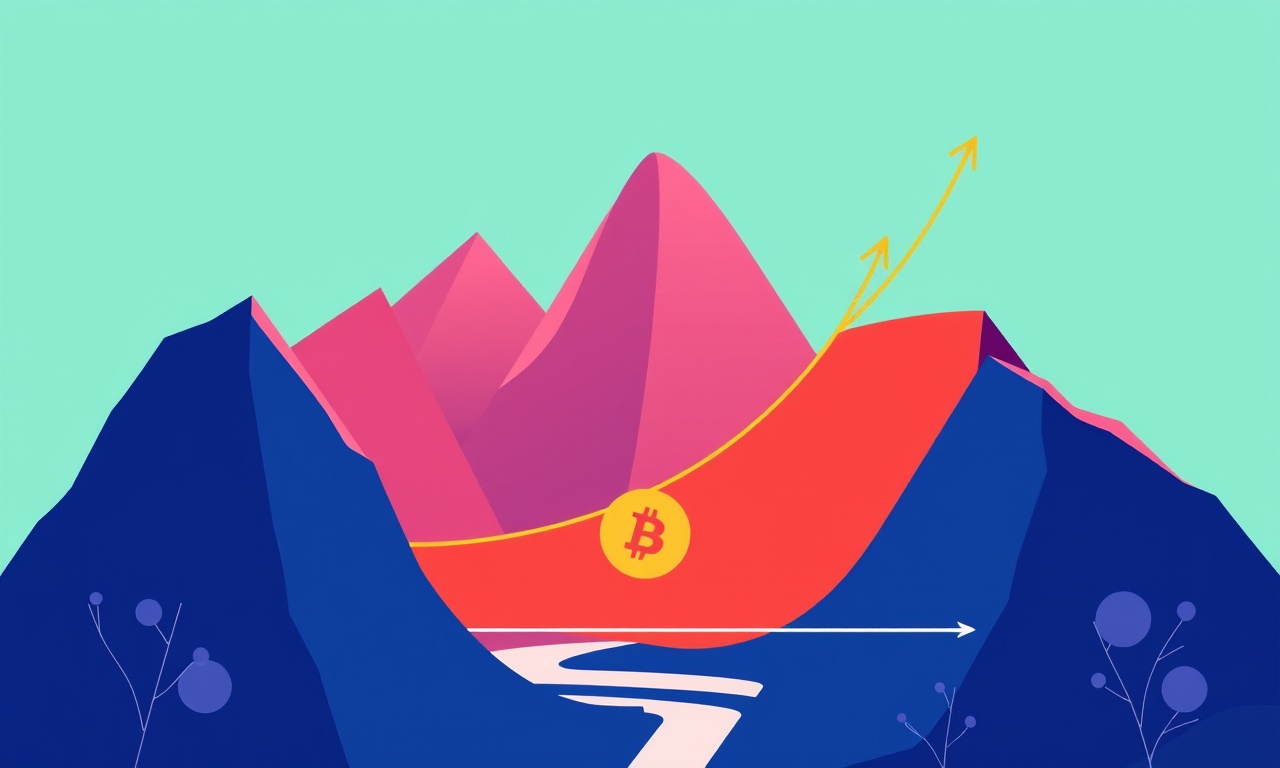
A visual representation of the relationship between fee rates and rewards can be seen as a curve: as fees rise, user activity falls; as rewards rise, user activity rises—up to a saturation point where additional rewards produce diminishing marginal gains.
Protocol Fee Models
Flat‑Rate Fees
The most straightforward model applies a constant percentage to every transaction. Many early protocols used flat fees of 0.3% or 0.1%. This model is easy to understand and to calculate but ignores differences in trade size, market conditions, and protocol usage patterns.
Dynamic Fees
Dynamic fee models adjust the fee percentage in real time based on supply‑demand signals. For instance, a concentrated liquidity protocol might charge higher fees when a specific price range is liquid, reducing pressure on less liquid ranges. Dynamic fees can smooth usage curves but require robust oracles and real‑time data feeds.
Tiered Fees
Tiered models offer different fee levels for users based on their activity or token holdings. For example, a protocol could grant a 0.25% fee to users who hold a minimum amount of governance tokens or who have transacted above a threshold in the past 30 days. This incentivizes long‑term engagement and aligns the interests of the protocol and its users.
Reward Structures
Liquidity Mining
Liquidity mining rewards liquidity providers (LPs) with new tokens, often a share of the protocol’s native token supply. The reward rate is typically expressed in tokens per block or per epoch and is designed to compensate for impermanent loss and opportunity cost.
Staking Rewards
Staking rewards are offered to users who lock governance tokens for a period, receiving a fixed interest rate or a share of transaction fees. Staking often serves dual purposes: providing capital to the protocol and locking governance tokens to reduce circulating supply.
Yield Farming
Yield farming strategies involve LPs or stakers earning rewards from multiple protocols simultaneously. Yield farmers often use automated strategies to move liquidity between pools, chasing higher returns. Protocols can capture a portion of yield farming profits by requiring a small fee on moves or by offering additional incentives for staying in a single pool.
The Balancing Equation
To formalize the relationship between fees, rewards, and net yield, consider the following equation for a given period:
Net Yield (R) = (Fee Revenue) – (Reward Payouts) – (Operational Costs)
Where:
- Fee Revenue = Σ (Transaction Volume × Fee Rate)
- Reward Payouts = Σ (Reward Rate × Time Locked × Token Price)
- Operational Costs = Gas, audits, marketing, etc.
Protocols can express this equation as a function of the fee rate (f) and reward rate (r):
R(f, r) = V * f – L * r – C
V is total transaction volume, L is the amount of liquidity locked, and C is fixed costs.
The goal is to choose f and r such that R remains positive while keeping V and L high enough to sustain the ecosystem.
Factors Influencing the Balance
Market Volatility
High volatility can lead to rapid changes in trade volume and impermanent loss, affecting both fee revenue and reward requirements. Protocols may need to increase rewards temporarily during market swings to prevent liquidity withdrawal.
User Behavior
Different users respond differently to fee and reward changes. Arbitrage traders may be highly sensitive to even minor fee adjustments, whereas long‑term holders may prioritize rewards. Understanding the user segments is key to targeted incentive design.
Governance Participation
Protocols that involve token holders in governance can use voting power to adjust fees or rewards dynamically. This creates a feedback loop: more participation leads to better parameters, which in turn encourages more participation.
Case Studies
Uniswap V3
Uniswap V3 introduced concentrated liquidity and a tiered fee structure (0.05%, 0.3%, 1%). This model rewarded high‑liquidity providers with higher fee tiers, aligning incentives for users to provide capital in narrow price ranges. The result was an increase in the overall gas‑adjusted TVL and improved capital efficiency.
SushiSwap
SushiSwap began with a 0.3% fee and a yield‑mining program that paid SUSHI to LPs. Over time, it added a 0.05% fee on its “Trident” router, gradually shifting to a lower fee to attract traders, while still rewarding LPs. Its phased approach allowed it to balance fee revenue with the desire to keep the protocol competitive.
Curve Finance
Curve uses a near‑zero fee (0.04%) and relies heavily on governance token rewards for LPs. The high rewards compensate for the low fee structure, maintaining liquidity for stablecoin pools. Curve’s model demonstrates how a low‑fee, high‑reward strategy can sustain high liquidity.
A comparative chart shows how fee structures and rewards interact across these protocols, illustrating the trade‑offs.
Strategies to Optimize Yield
Dynamic Fee Adjustment Algorithms
Deploy algorithms that monitor real‑time liquidity and volatility, adjusting fees up or down accordingly. For example, a fee could increase during periods of high trade volume to capture more revenue, then drop during low activity to keep traders engaged.
Reward Decay Mechanisms
Implement a reward decay schedule that gradually reduces token payouts over time. This prevents sudden reward dilution and ensures that the protocol can sustain long‑term incentives without depleting its treasury.
Risk‑Adjusted Incentives
Adjust rewards based on the risk profile of the liquidity pool. Pools with higher impermanent loss potential receive higher rewards, aligning provider risk with compensation.
Layered Incentive Models
Create multiple layers of rewards: core protocol rewards (e.g., fee shares), governance rewards (token allocations for voting), and ancillary rewards (e.g., airdrops for participation in ecosystem events). Layered models can attract diverse participants and spread risk.
Simulation and Modeling
Before deploying a new fee or reward regime, simulate its impact under various market scenarios. Use Monte Carlo methods to generate random price paths and estimate expected TVL and fee revenue. Backtesting against historical data can reveal potential pitfalls such as reward leakage or liquidity evaporation.
Key metrics to track:
- Fee‑to‑Reward Ratio (FRR) – the ratio of fee revenue to reward payouts; a healthy FRR typically ranges between 1.5:1 and 3:1.
- Liquidity Utilization Rate (LUR) – the percentage of locked capital actively generating fees.
- Retention Index (RI) – the proportion of liquidity providers who stay beyond a defined period.
Governance and Incentive Alignment
Token‑based governance gives users a stake in the protocol’s future and an incentive to stay invested. A common governance model is a quadratic voting system, where the influence of each vote grows sub‑linearly with the number of tokens held. This mitigates the dominance of large holders while still rewarding active participation.
Governance can also be used to adjust fee/reward parameters via proposals, creating a democratic and transparent path to optimization.
Potential Pitfalls and Mitigations
Fee Creep
If fees rise gradually over time, users may become unaware until the impact is significant. Mitigation: publish fee history charts and use a transparent fee schedule.
Reward Dilution
Issuing large amounts of new tokens for rewards can dilute existing token holders’ value. Mitigation: tie rewards to the protocol’s net revenue, limiting total reward issuance.
Front‑Running and Miner Extractable Value (MEV)
High fees and rewards can incentivize MEV extraction, harming user experience. Mitigation: use commit‑reveal schemes or layer‑2 solutions to reduce MEV opportunities.
Impermanent Loss Overlook
Reward models that ignore impermanent loss can attract liquidity that quickly evaporates during price swings. Mitigation: calculate a risk‑adjusted reward rate that accounts for expected impermanent loss.
Future Directions
-
Protocol‑Level Fee Tiers
More granular fee tiers will allow protocols to match fee rates with specific asset classes or market conditions. -
Cross‑Protocol Incentive Layering
Decentralized exchanges could share a common incentive layer, rewarding users for interacting across multiple platforms. -
Dynamic Governance Tokens
Tokens whose value directly correlates with fee revenue could create a self‑balancing incentive system, where token price adjustments automatically influence fee and reward parameters. -
Regulatory‑Aware Models
As regulations tighten, fee and reward models will need to accommodate compliance, possibly through off‑chain governance or hybrid structures.
Conclusion
Optimizing yield generation in a DeFi protocol is a multi‑dimensional problem. Protocol designers must understand how fee structures and reward programs interact with market conditions, user behavior, and governance dynamics. By treating the balance between fees and rewards as an explicit equation, testing with rigorous simulations, and employing adaptive algorithms, protocols can maintain high liquidity, attract traders, and ensure long‑term sustainability.
The future will see more nuanced, data‑driven incentive architectures that respond to real‑world signals and align the interests of all participants, making DeFi ecosystems more resilient and inclusive.

.png)
Lucas Tanaka
Lucas is a data-driven DeFi analyst focused on algorithmic trading and smart contract automation. His background in quantitative finance helps him bridge complex crypto mechanics with practical insights for builders, investors, and enthusiasts alike.
Random Posts

Smart Contract Risk DeFi Insurance and Capital Allocation Best Practices
Know that smart contracts aren’t foolproof-beyond bugs, the safest strategy is diversified capital allocation and sound DeFi insurance. Don’t let a single exploit derail your portfolio.
8 months ago

Dive Deep into DeFi Protocols and Account Abstraction
Explore how account abstraction simplifies DeFi, making smart contract accounts flexible and secure, and uncover the layered protocols that empower open finance.
8 months ago

Token Standards Unveiled: ERC-721 vs ERC-1155 Explained
Discover how ERC-721 and ERC-1155 shape digital assets: ERC-721 gives each token its own identity, while ERC-1155 bundles multiple types for efficiency. Learn why choosing the right standard matters for creators, wallets, and marketplaces.
8 months ago

From Theory to Practice: DeFi Option Pricing and Volatility Smile Analysis
Discover how to tame the hype in DeFi options. Read about spotting emotional triggers, using volatility smiles and practical steps to protect your trades from frenzy.
7 months ago

Demystifying DeFi: A Beginner’s Guide to Blockchain Basics and Delegatecall
Learn how DeFi blends blockchain, smart contracts, and delegatecall for secure, composable finance. This guide breaks down the basics, shows how delegatecall works, and maps the pieces for users and developers.
2 months ago
Latest Posts

Foundations Of DeFi Core Primitives And Governance Models
Smart contracts are DeFi’s nervous system: deterministic, immutable, transparent. Governance models let protocols evolve autonomously without central authority.
2 days ago
Deep Dive Into L2 Scaling For DeFi And The Cost Of ZK Rollup Proof Generation
Learn how Layer-2, especially ZK rollups, boosts DeFi with faster, cheaper transactions and uncovering the real cost of generating zk proofs.
2 days ago

Modeling Interest Rates in Decentralized Finance
Discover how DeFi protocols set dynamic interest rates using supply-demand curves, optimize yields, and shield against liquidations, essential insights for developers and liquidity providers.
2 days ago