A Beginner's Guide to DeFi Library Concepts and Terminology
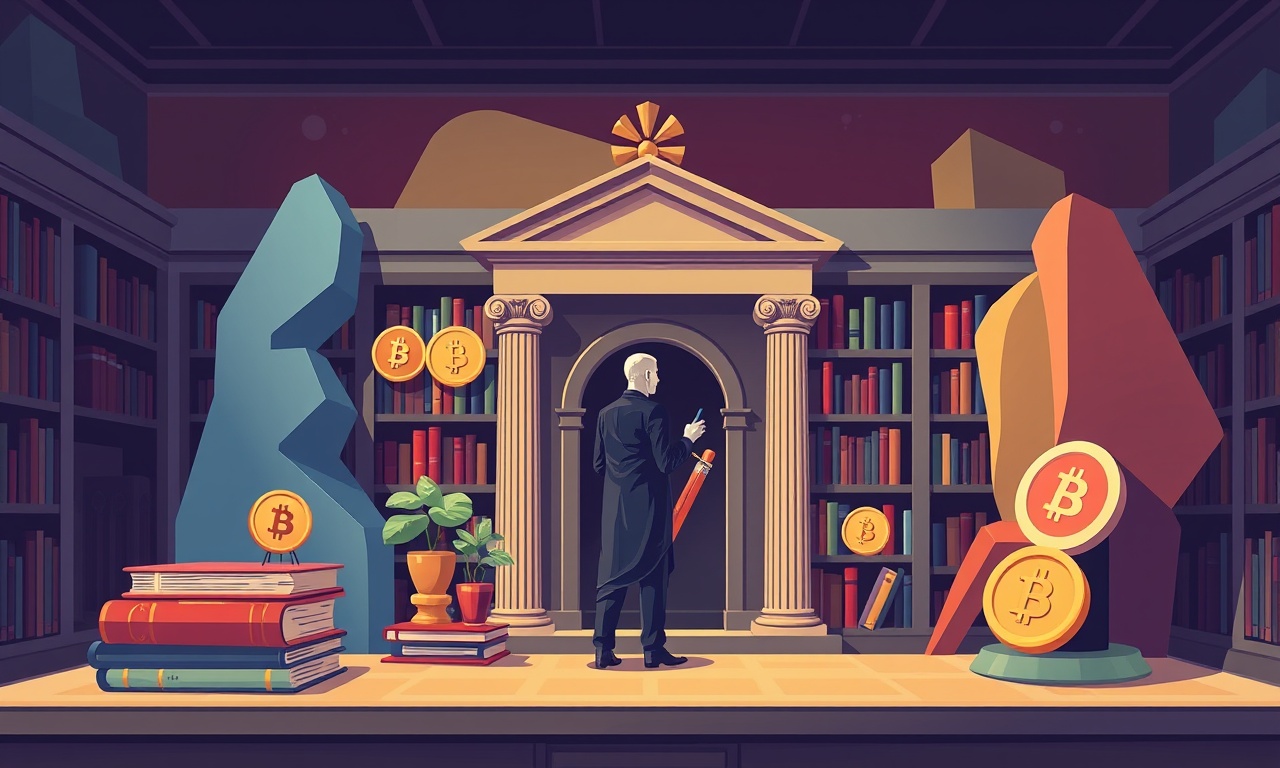
Imagine you’re scrolling through your phone after a long day at the office, and a bright banner pops up: “Earn 10% APR on your crypto! No risk, no hassle.” Your brain does a double‑take. You’ve heard the buzz, but you’re not sure what it really means. That’s a perfect starting point for our walk through DeFi library concepts and terminology. Let’s zoom out, breathe, and look at what’s really going on.
Foundations of DeFi: A quick tour
When I left the world of traditional portfolio management, the first thing I realized was that the language of finance had a new, digital layer. In the old world, a bond is a bond; a share is a share. In the DeFi world, you have tokens that can be tokens, or tokens that are just pieces of code. The DeFi library is a set of building blocks that lets you understand how these pieces fit together.
Blockchain, the ledger of truth
Think of the blockchain as a public notebook that no single person can edit. Every page (or block) is written by many people, and once ink is put on it, the entry can’t be erased. That’s what gives DeFi its trustworthiness without a central authority.
Tokens: the new currency of ideas
Tokens come in two main flavors: fungible (like Bitcoin, where one unit is interchangeable with another) and non‑fungible (NFTs, where each piece is unique). In DeFi, most tokens are fungible and can represent anything from a stablecoin pegged to the dollar to a governance right in a protocol.
Smart contracts: the rules written in code
Smart contracts are like automatic vending machines for finance. You set the rules, and the machine enforces them with no human intervention. That’s why a token can automatically distribute interest, take a fee, or re‑allocate capital—all without someone having to flip a switch.
Liquidity: the blood of the system
Liquidity is what keeps the system running. In a bank, it’s the cash on hand. In DeFi, it’s the pool of tokens that traders can swap or lend. The more liquidity, the smaller the “price impact” when you trade.
Yield and staking
Yield is the return you get from your investment. Staking is a way to lock your tokens into a protocol to earn that yield. It’s similar to earning interest on a savings account, except you’re also helping the network stay secure.
Gas: the price of participation
Every action on a blockchain costs a small fee, called gas. It’s like paying for a bus ticket so your message can travel from your wallet to the network. High gas prices can discourage small traders, so protocols often design ways to keep gas low.
Key DeFi Protocol Terminology
Decentralized Exchanges (DEX)
A DEX is an online marketplace where you can trade tokens directly with other users, without a middleman. The two most common DEX architectures are Automated Market Makers (AMMs) and Central Limit Order Books (CLOBs). Knowing the difference helps you pick the right tool for the right trade.
Automated Market Makers (AMM)
An AMM replaces an order book with a mathematical formula that sets prices based on the ratio of tokens in a liquidity pool. Uniswap, SushiSwap, and Curve are the big names here. The beauty is that you can swap tokens instantly, and the protocol adjusts the price automatically.
Example
Imagine you want to trade 1 ETH for DAI on an AMM. The pool contains 100 ETH and 200,000 DAI. The AMM formula will compute the new ratio after your trade and adjust the price accordingly. The more you trade, the more the pool’s balance changes, and the price moves.
Central Limit Order Books (CLOB)
A CLOB keeps a list of orders (buy and sell) like a traditional exchange. The price is set by the intersection of the highest buy order and the lowest sell order. This architecture allows for more sophisticated order types (limit, stop, etc.), but it requires a more complex infrastructure and often higher gas costs.
Example
You place a limit order to buy 1 BTC at €30,000. If someone else sells at €30,000 or lower, your order gets filled. If the market moves to €30,200, you’re not obligated to buy unless you want to.
Liquidity Pool (LP)
An LP is simply a smart contract that holds two (or more) tokens. Anyone who deposits tokens into an LP earns a share of the trading fees. In return, you’re exposed to impermanent loss if the token prices diverge.
Impermanent Loss (IL)
Think of IL as the difference between holding your tokens in a liquidity pool versus just holding them in a wallet. If the ratio of tokens changes, you might end up with less value when you withdraw than you would have had if you had just held the tokens. The loss is “impermanent” because it can be recovered if the price ratio returns to its original state.
Oracles
Oracles bring external data into the blockchain. They’re essential for protocols that need real‑world information, such as the price of Bitcoin for a lending platform. Imagine a weather station that tells a smart contract the current temperature—without it, the contract can’t make decisions that depend on the outside world.
Governance Token
Governance tokens let holders influence protocol upgrades, fee structures, or feature additions. Think of it as a voting share in a company, but on a blockchain. You can usually propose changes and vote through a decentralized voting mechanism.
Yield Farming and Liquidity Mining
These terms describe how you can earn more tokens by providing liquidity or participating in governance. Yield farming is a broader term, while liquidity mining refers specifically to earning native protocol tokens as an incentive.
The Three Pillars of DEX Design: AMM, CLOB, and Hybrid Models
AMM: The “no‑order‑book” path
The AMM model shines when you need speed and simplicity. You don’t need to think about limit prices; the protocol does it for you. That’s why many newcomers start with AMMs—there’s less friction.
CLOB: The “traditional” path
If you’re a seasoned trader who likes to control the exact price at which you buy or sell, CLOBs might be more comfortable. They’re closer to the way stock exchanges operate, and they often offer lower slippage for large orders.
Hybrid: The best of both worlds?
Some protocols blend AMM and CLOB to offer a layered approach. For example, you can add a limit order to an AMM to get better pricing while still enjoying the liquidity of the pool. It’s like having a garden with both rows of vegetables and a fruit tree—each offers a different harvest.
How to Start Exploring DeFi Safely
1. Use a testnet first
Before you risk real money, experiment on a test network. It’s like a sandbox where you can practice trading without the fear of losing real funds. Most major protocols have a testnet version.
2. Check the gas fee and slippage
High gas fees can eat into your returns. Tools like GasNow or Etherscan’s gas tracker help you time your transactions. And remember: the slippage setting determines how much price difference you tolerate before the trade cancels.
3. Diversify your learning
Read the whitepaper, but also watch tutorial videos and join community forums. The DeFi ecosystem is moving fast, so staying curious is half the battle.
4. Keep an eye on impermanent loss
When you’re providing liquidity, compute the potential IL. There are calculators online that estimate how much you could lose if the price ratio changes. It’s a risk you should be comfortable with.
5. Use a hardware wallet
If you hold significant amounts of DeFi tokens, store them in a hardware wallet like Ledger or Trezor. It’s the most secure way to keep your keys out of the internet’s reach.
A Personal Story: My first AMM trade
When I first dipped my toes into DeFi, I was skeptical. I had been in portfolios for twenty years, and the idea that I could just open a browser, click a button, and swap tokens felt too good to be true. So I set up a testnet wallet, bought some test ETH, and swapped it for DAI on Uniswap V3.
The experience was surprisingly transparent. The UI told me the exact amount of DAI I would receive, the gas cost, and the price impact. After the trade, I went back to the pool to see how the price moved. The numbers matched the formula. That clarity was a revelation—no hidden fees, no mysterious intermediaries.
That small experiment helped me build a foundation of trust. I could see that the protocol behaved predictably, and that gave me confidence to start exploring other protocols.
Let’s Zoom Out: Where DeFi fits in your portfolio
You might wonder: Should I throw all my savings into DeFi? That’s a big “no.” DeFi is a tool, not a replacement for a diversified portfolio. Think of it like adding a new crop to your garden. If the soil is right, it can add value, but you shouldn’t rely on a single plant for the entire harvest.
Think in terms of risk layers
- Platform risk – The protocol could fail or be hacked.
- Smart contract risk – Bugs or exploits in the code.
- Market risk – Token price volatility and impermanent loss.
Balance each layer against your overall risk tolerance. If you’re comfortable with volatility and want to experiment, a small allocation (say 1–2% of your portfolio) is reasonable.
Final Takeaway: Start Small, Stay Informed, and Keep the Bigger Picture in Mind
The world of DeFi can feel like a dense forest, but the path is clearer if you pace yourself. Here’s what you can do right now:
- Experiment on a testnet – get hands‑on practice without risk.
- Read the documentation – every protocol has a whitepaper that explains the math.
- Track gas and slippage – don’t let transaction costs erase your returns.
- Diversify – use DeFi as one component of a broader strategy.
In the long run, remember the phrase I often use: “Markets test patience before rewarding it.” DeFi is no exception. Treat it as a learning experience, stay curious, and let the data guide you.
Let’s keep the conversation going—share your questions, or drop a line if you want to discuss a particular protocol. I’m always up for a chat over coffee (virtual or real).

.png)
Sofia Renz
Sofia is a blockchain strategist and educator passionate about Web3 transparency. She explores risk frameworks, incentive design, and sustainable yield systems within DeFi. Her writing simplifies deep crypto concepts for readers at every level.
Random Posts

Decentralized Asset Modeling: Uncovering Loss Extremes and Recovery Trends
Turn gut panic into data-driven insight with disciplined metrics that expose DeFi loss extremes and recoveries, surpassing traditional risk models.
5 months ago

Smart Contract Security in DeFi Protecting Access Controls
In DeFi, access control is the frontline defense. A single logic flaw can erase user funds. This guide reveals common vulnerabilities and gives best practice rules to lock down contracts.
4 months ago

Beyond the Curve: Innovations in AMM Design to Reduce Impermanent Loss
Discover how next, gen AMMs go beyond the constant, product model, cutting impermanent loss while boosting capital efficiency for liquidity providers.
1 month ago
Mastering MEV in Advanced DeFi, Protocol Integration and Composable Liquidity Aggregation
Discover how mastering MEV and protocol integration unlocks composable liquidity, turning DeFi from noise into a precision garden.
3 months ago

A Beginner's Guide to Blockchain Security Terms
Unlock blockchain security with clear, simple terms, so you can protect your crypto, avoid scams, and confidently navigate the future of digital money.
2 months ago
Latest Posts

Foundations Of DeFi Core Primitives And Governance Models
Smart contracts are DeFi’s nervous system: deterministic, immutable, transparent. Governance models let protocols evolve autonomously without central authority.
2 days ago
Deep Dive Into L2 Scaling For DeFi And The Cost Of ZK Rollup Proof Generation
Learn how Layer-2, especially ZK rollups, boosts DeFi with faster, cheaper transactions and uncovering the real cost of generating zk proofs.
2 days ago

Modeling Interest Rates in Decentralized Finance
Discover how DeFi protocols set dynamic interest rates using supply-demand curves, optimize yields, and shield against liquidations, essential insights for developers and liquidity providers.
2 days ago